Barge-served vs. rail-served scrap yards: spotting the difference from overhead
Pull up a scrap yard on satellite and the first question isn't how big the pile is. It's how the material leaves. That tells you more about the account than tonnage ever will, because a yard's outbound mode decides what kind of iron it runs, what the gate traffic looks like, and whether it's feeding a domestic mill or an export buyer. Barge and rail yards look different from the ground and they look different from above too, once you know what to check.
What a barge dock actually looks like from overhead
Start at the water's edge. Look for mooring cells or dolphins, the dark circular or cluster pilings set off from the bank, spaced to hold barges steady against current and wake. Behind them, a fixed wharf structure or a traveling gantry crane running on rail tracks parallel to the shoreline is the giveaway. That gantry is doing the loading, not a rubber-tired machine driving up a ramp.
Stockpiles at a barge yard tend to run in long rows parallel to the water, laid out so the gantry or a shore-mounted material handler can reach the barge without a second handling step. You'll also see a straight, wide apron between the pile rows and the wharf, built for truck dumping and for the crane's swing radius. If the yard has a magnet or grapple crane mounted on its own rail spur right along the bank, running the length of several barge slips, that's an export scrap terminal setup almost every time. Deep-draft river and coastal yards that move heavy melt to export buyers build around that crane rail the way a domestic yard builds around a shear line.
What gives away a rail-served yard
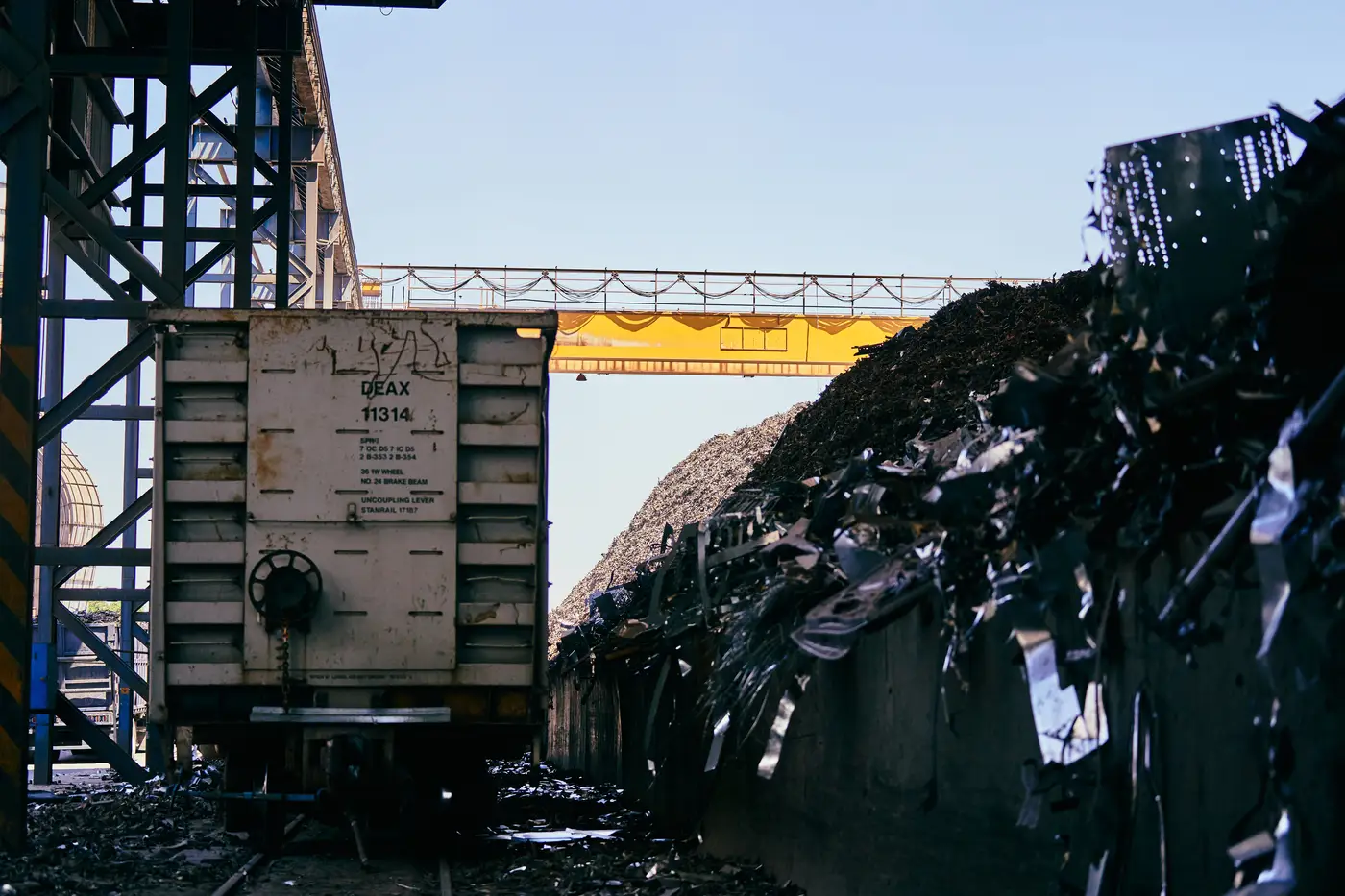
A rail-served yard tells on itself with the spur. Look for a single track or small fan of tracks branching off a main line and running into the property, usually ending in a loop or a stub with a bumper. Count the cars sitting on it. A yard loading unit trains will have long strings of gondola cars parked along a straight run, often with a rotary dumper or a traveling loader bridge spanning the track. A smaller yard shipping a few cars a week will just have a short spur with two or three gons sitting under a stationary conveyor or a mobile material handler loading from the side.
The equipment mix differs too. Rail yards lean on wheeled loaders and material handlers working the pile-to-car transfer, because the car sits still and the machine comes to it. Pile rows run oriented toward the spur rather than toward water, and a scale house sits positioned to weigh inbound trucks before they tip, since rail-served interior yards usually pull material by truck first and consolidate for the outbound unit train or car spot later.
Why the distinction matters before you ever drive out
A barge yard and a rail yard aren't chasing the same buyer and they don't run the same machine count. The barge yard with export exposure is more likely to be running a heavier material handler fleet to keep pace with vessel loading windows. The rail yard's fleet size tracks more with how many cars it spots per week. If you're sizing a market from a desk before you ever knock on a gate, reading the dock and the spur first tells you which yards are worth a call this quarter and which ones just moved a crane or added a second spur track since the last time anyone looked.
That's the part satellite imagery alone won't do on a schedule, which is why Scrapyard Fleet Mapping exists: a quarterly count of the material handlers, loaders, and cranes working every yard in a market, so you know what changed before you're standing at the scale house asking.
Pull a market's yards up this quarter and see which ones added iron.