Telling a Sennebogen from a Fuchs material handler from above
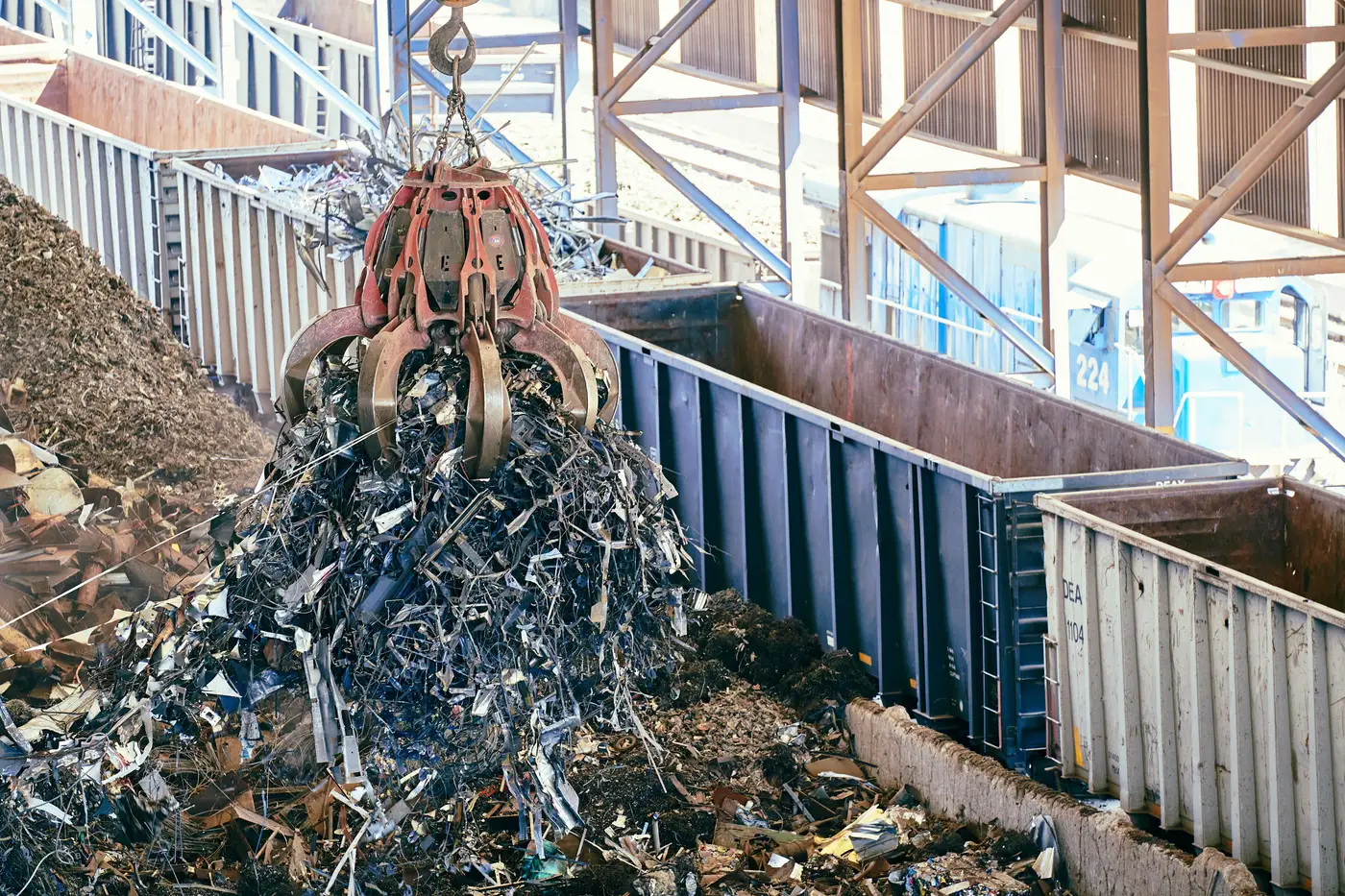
At ground level you know a Sennebogen from a Fuchs before you're close enough to read the decal. The elevated cab gives it away, or the sound of the diesel, or the way the boom droops on the reach. None of that survives a straight-down pass at 0.5 m resolution. No paint, no logo, no engine note. Just a shape and a shadow.
That's the problem a lot of people run into the first time they pull a satellite image of a yard and try to count machines by brand. It's doable, but you're reading silhouette and shadow geometry, not a decal.
What actually survives at half-meter resolution
A pixel at 0.5 m GSD covers roughly a boot sole's width on the ground. That's plenty to pick out a chassis outline, a counterweight bulge, a boom in motion, a cast shadow. It is nowhere near enough to resolve a Sennebogen green from a Fuchs orange, let alone a serial plate. So the brand tell comes down to four things: cab position, boom knuckle shape, counterweight proportion, and undercarriage footprint.
Cab height is the fastest tell
Sennebogen's purpose-built handlers, the 830 class and up, run the operator cab up on an elevating riser separate from the main chassis. From directly overhead that riser throws its own shadow, distinct from the boom's shadow and offset to one side of the body. It looks like a second, thinner object standing apart from the machine.
Fuchs MHL handlers keep the cab low and tucked close against the chassis. There's no separate riser shadow. The whole machine reads as one compact mass with the boom coming off the top, not a body plus a stalk.
Liebherr's LH series sits in between on cab height but carries more counterweight out back, so the rear of the machine reads wider and squarer than either of the other two, especially if the superstructure has swung mid-pass.
Boom shape and undercarriage tell you the rest
Fuchs reach booms tend to show a pronounced droop on the stick, parallel-lift geometry that reads as a soft double curve rather than a hard elbow. Sennebogen booms on the material handler line run straighter with a single sharper knuckle. Liebherr's tend toward a heavier, thicker-looking boom section relative to the body, which is consistent with the bigger counterweight.
Undercarriage narrows it further. Fuchs handlers in a scrap yard are usually wheeled, four stabilizer pads visible as small square shadows at the corners when they're deployed. Sennebogen runs both tracked and wheeled depending on the yard. Liebherr's LH units are almost always tracked, with a wider gauge than you'd see on a comparable wheeled loader parked nearby.
Where this breaks down
Boom position changes the silhouette from one quarterly pass to the next. A machine stowed with the boom folded reads completely differently than the same machine mid-grab with the boom extended over a rail car. Two or three handlers parked nose to tail in a tight stack will blur their shadows together, and at that point you're guessing. A rep standing at the fence line can ID the model in five seconds by sound alone. A satellite pass, however good the resolution, isn't trying to replace that.
Sizing a market before you knock on a gate runs on count and type: how many material handlers, how many wheeled loaders, how many crane-type units sitting in that yard, repeated every quarter so you can see a fleet grow or shrink before the buyer tells you. Scrapyard Fleet Mapping tracks that across every yard in a market on a quarterly pass.
If you're trying to size up a territory's worth of yards instead of guessing from a windshield survey, that's worth a look.