What counts as crane-type equipment in a scrap yard fleet count
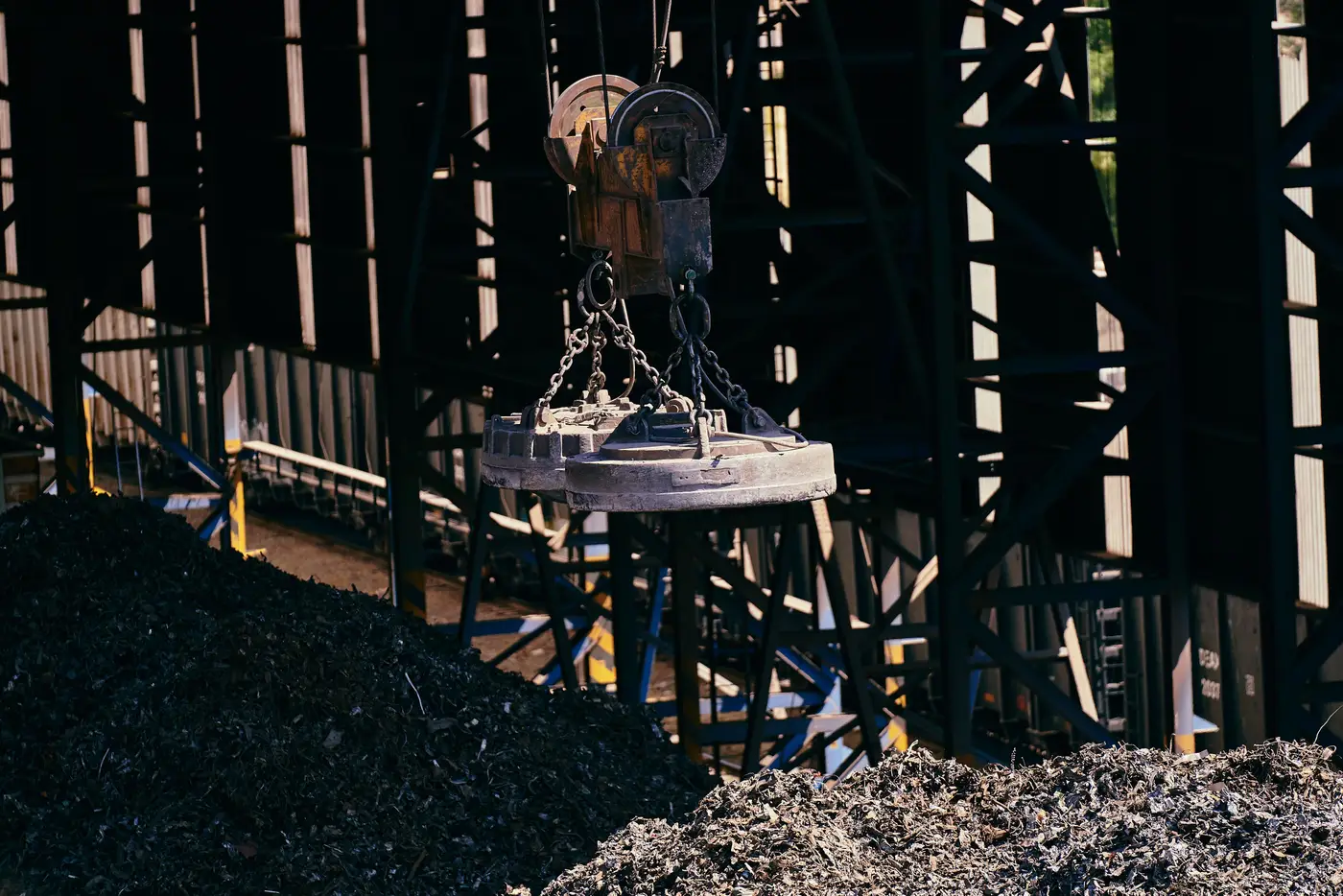
If you've ever tried to tally up what's running at a yard from the road or from an aerial shot, you've hit this problem fast: not every machine with a boom and a grapple belongs in the same bucket. A fleet count that lumps everything together isn't worth much to anyone sizing a territory, and it's a sloppy way to compare one yard against the next.
Most people working a scrap and recycling territory sort yard iron into three buckets: material handlers, wheeled loaders, and crane-type equipment. The first two are easy to spot once you know what you're looking at. Crane-type is where the arguments start, because "crane" covers a few very different machines that got stuck under one label.
Gantry cranes and pedestal cranes
A gantry crane in a scrap yard is the overhead rail-mounted unit, usually straddling a stock row or a rail siding, moving a grapple or magnet along a fixed span. It doesn't walk the yard. It doesn't reposition day to day. If a yard has one, you'll see the rail or the legs well before you see the machine itself, and it's usually tied to a specific unloading or loading function, like pulling material off rail cars.
A pedestal crane is the fixed-base unit bolted to a dock, a barge, or a concrete pad, usually working a river or port-adjacent yard where material comes in by water. Like the gantry, it doesn't relocate. Both of these get counted as crane-type because their undercarriage situation (none) and their duty cycle (fixed point, high cycle) set them apart from anything on tracks or wheels that drives around the yard floor.
Where this gets confusing is that some yards run a rail-mounted gantry doing the exact same grapple work a purpose-built material handler does elsewhere on the same site. The equipment class comes down to how the machine is mounted and whether it moves at all, not what's bolted to the end of the boom.
Grapple crane vs material handler
This is the comparison that trips up a count more than any other, because from a distance a tracked grapple crane and a purpose-built material handler can look alike. Both have a boom, both swing a grapple, both pile scrap.
The difference is in the base machine. A material handler (your Sennebogen, Fuchs, Liebherr-class unit) is purpose-built for the work: elevated cab for sightlines over a stockpile, undercarriage designed for yard travel, and a boom geometry built around high-cycle grapple and magnet work all day. A grapple crane, by contrast, is more often a crane chassis, sometimes a converted excavator or a lattice-boom crawler crane, fitted with a grapple as an attachment rather than built around one. It'll have a different cab height, a different swing speed, and usually a slower duty cycle because the base machine wasn't engineered for the constant swing-and-drop cycle a busy stock row demands.
In practice, a lot of smaller yards or newer operations run grapple-equipped excavators or older crawler cranes doing material handler work because that's what was on the lot or what the budget allowed. For a fleet count, those still get flagged as crane-type rather than material handler. The base machine class is what the count is tracking, not the attachment on the end of the stick.
Why the category matters for a fleet count
None of this is pedantry for its own sake. If you're reading a market by its machine mix, a yard running three gantry cranes and a pedestal unit tells a different story than a yard running four material handlers and a wheeled loader, even if both yards move similar tonnage. The first is a fixed-infrastructure operation, probably rail- or barge-fed. The second is a yard built around flexible stockpile work, and it's the kind of site more likely to be in the market for another material handler when volume grows.
That's the distinction Scrapyard Fleet Mapping is built to hold onto. Every yard in a market gets a per-yard machine count with the type breakdown kept intact, material handler, wheeled loader, and crane-type sorted separately, on a quarterly pass, so you're reading fleet mix instead of a raw equipment tally.
If you're sizing a territory and want the crane-type split held separate from the rest of the count, that's the whole point of the offer.