What a shredder infeed does to a scrap yard's machine count
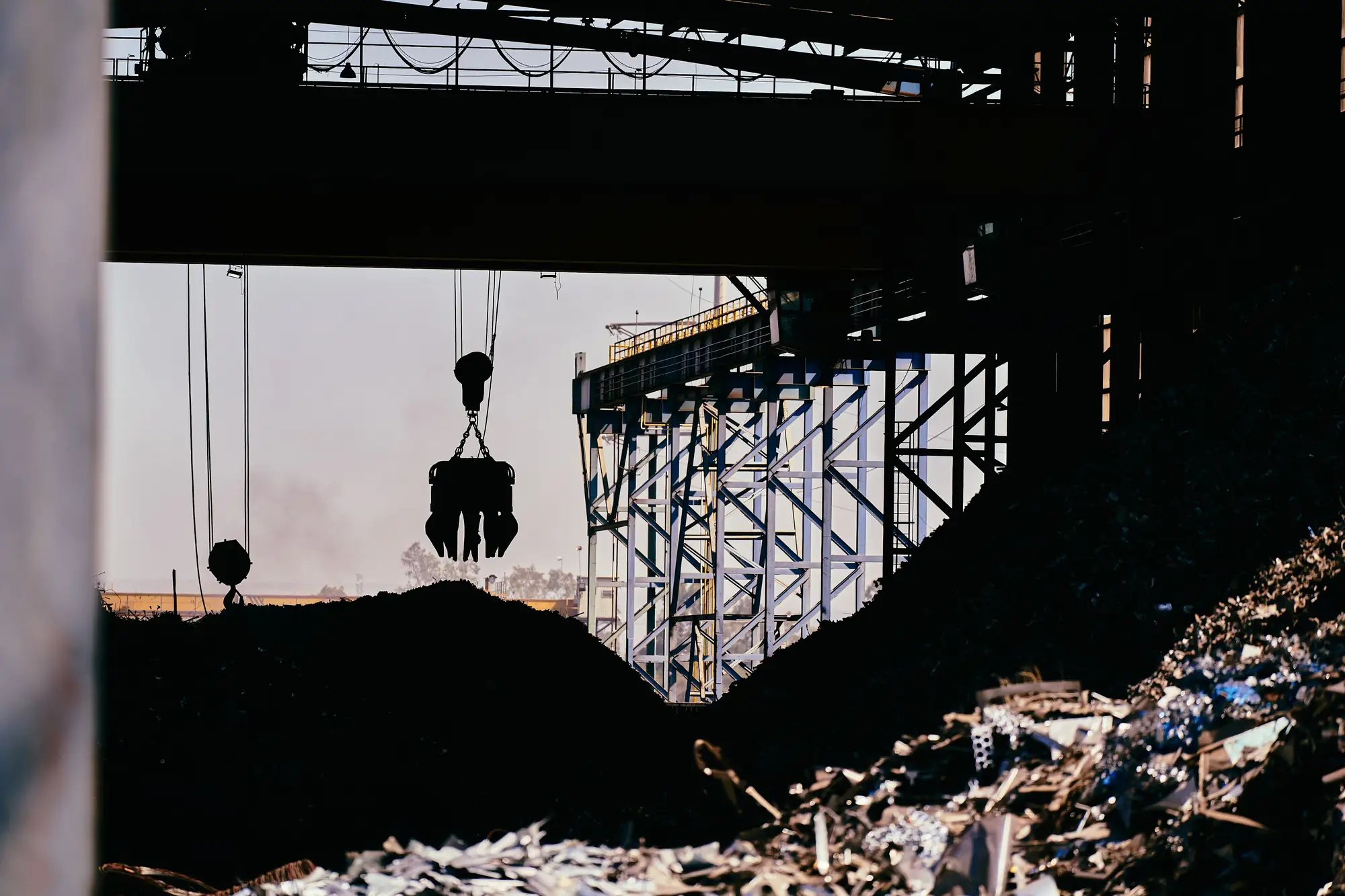
Ask most people what limits a shredder's output and they'll say the mill: the rotor, the hammers, the horsepower rating stamped on the spec sheet. Walk the tipping floor at any busy shred yard and you'll find the real constraint sits upstream of all that, in the infeed conveyor and whatever's loading it.
An auto shredder rated at 150 tons an hour can only hit that number if material arrives at the hammer mill steadily, in pieces the mill can grab and process without choking. A slug of baled cars dumped all at once jams the throat. A trickle starves the mill and burns diesel for nothing. The infeed belt, its width, its speed, the ram feeder or hog at the head of it, sets the ceiling on what the shredder can eat. Everything behind that belt exists to keep it fed at that rate without overloading it.
Feed rate is a staffing problem before it's a mechanical one
Once you know the infeed's target rate, you know how much prepped material has to show up at the belt per hour. That number tells you how many material handlers you need loading it. A yard running a single high-capacity shredder with one wide infeed conveyor might run three or four grapple machines in rotation just to keep the belt loaded without gaps, plus a magnet or two pulling ferrous off a downstream picking line, plus whatever's sorting ASR at the back end.
This is where outside estimates of yard size tend to go wrong. Someone counts acreage, or counts trucks on scale tickets, and backs into a guess at headcount or machine count. The infeed doesn't care about acreage. A cramped two-acre yard with a well-fed infeed can out-tonnage a sprawling ten-acre lot where the conveyor sits half-empty half the shift because there's only one loader working the pile. Shredder capacity drives equipment sizing far more than footprint does.
What this means for sizing a yard from the outside
If you're trying to size up a competitor's operation, or figure out how many machines a given market can absorb before you go knock on gates, the shredder infeed is the thing to think about, even if you can't see it directly. A yard running a lot of material handlers around its shred line, grapples cycling the pile, a loader staging feedstock, a second handler working the picking table, is signaling an infeed running at a rate that needs that much labor to feed it. Fewer machines parked near the shredder usually means a smaller infeed, a slower cycle, or a yard that's not running the mill hard that week.
Counting machines on the ground at a yard tells you more about real throughput than tonnage figures anyone's willing to share. The equipment has to match the feed rate, or the shredder either sits hungry or gets fed too hard and jams. Sizing a market by what's actually parked and working at each yard beats trusting what a yard claims on paper.
This is the gap Scrapyard Fleet Mapping is built around. It counts and sorts the material handlers, wheeled loaders, and crane-type machines working every scrap and recycling yard in a market on a quarterly pass, so you get a per-yard machine count with type breakdown instead of a guess based on acreage or a stale directory listing. If you want a read on who's running a lean crew at a small infeed and who's got four handlers cycling a big one before you spend a day driving the territory, that's a quarterly machine count for every yard in your territory worth a look.
See what's parked at every yard in your next market before you drive it.